
In this Sunday’s Gospel, Jesus puts loving God and our neighbors at the center of everything. It sounds simple enough, but we need to remember something important about that word, neighbor: It doesn’t just mean the people we like, get along with, or enjoy spending time with. It also includes people we may find difficult to love.
Most of us have probably heard (or said) the familiar line, “You don’t have to like someone (perhaps a sibling), but you have to love them.” We often tell children this, but I think adults could use a reminder every now and then, too. After all, it’s pretty easy to love people who are easy to love, but what about the person who cuts you off in traffic, jumps ahead of you in line, or takes forever when you’re already running late? What about someone who doesn’t do things the way you think they should, sits in “your” pew at church, or never misses a chance to tell you why your political opinions are wrong? Yep. Jesus is talking about those people, too.
So, how do we actually love them? First, I think we need to recognize that it’s perfectly okay to get frustrated or annoyed! We’re human. We have emotions, opinions, preferences, and, sometimes, very little patience. However, it’s in what we do after that initial reaction that gives our faith a chance to make a difference.
We may not be able to stop ourselves from feeling annoyed, but we can choose what we do with that feeling. Sometimes, all it takes is a few seconds to interrupt our usual response, take a deep breath, and say a quick prayer, even something as simple as, “Lord, help me see this person through Your eyes.” It doesn’t have to be complicated or take more than a few seconds—just enough time to remind ourselves that the person frustrating us is also someone God loves.
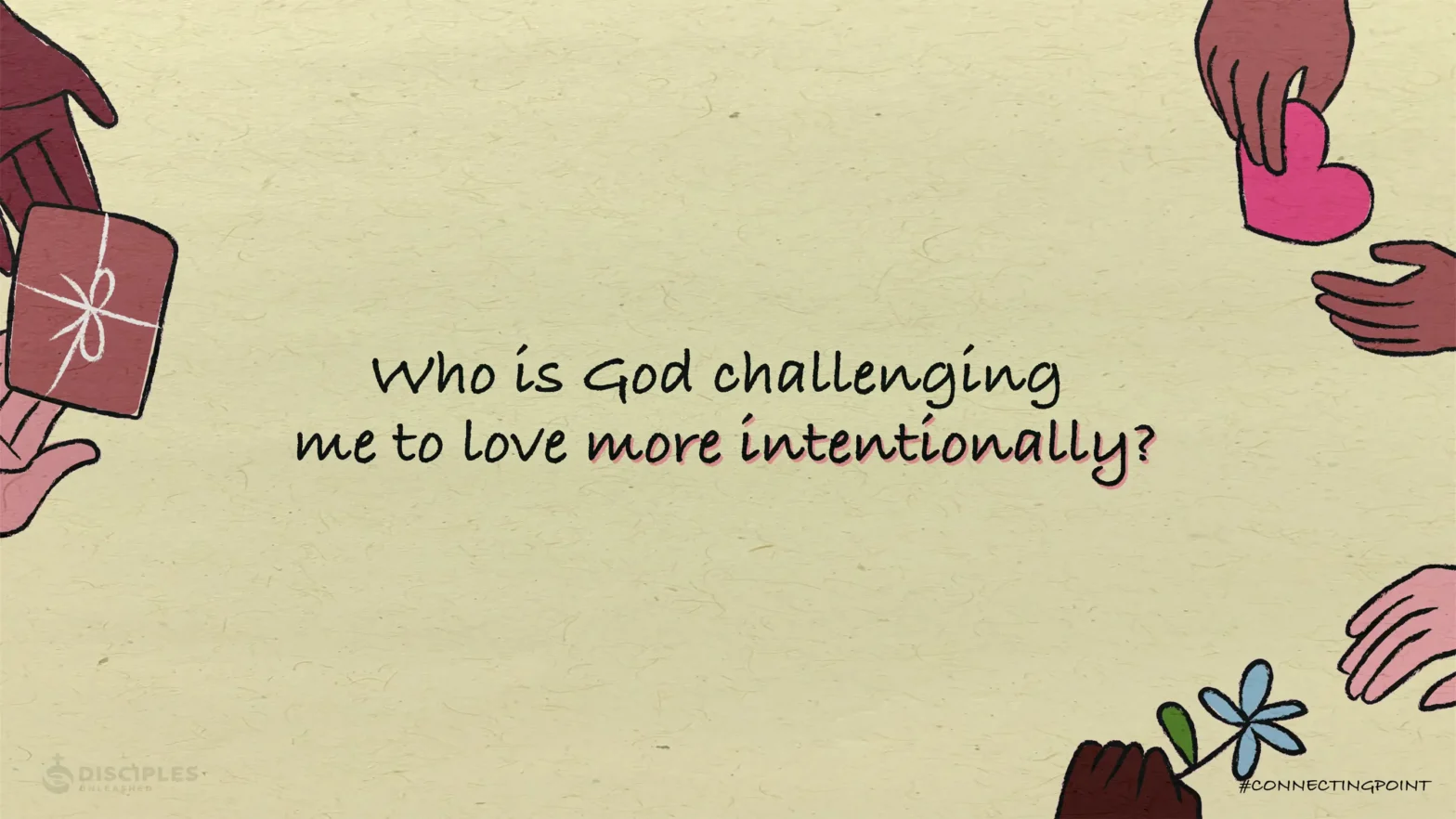
Now, I want you to think of one person in your life who regularly bothers or annoys you. Maybe it’s someone at work, a neighbor, a family member, or someone you see at church. Chances are that a name or face came to mind pretty quickly. Here’s where I think our Connecting Point becomes especially important: It’s asking us to love more intentionally. And that means doing more than simply praying, “God, please give me the patience to deal with this person today!”
The next time you see that person, start with a genuine smile and a friendly “Good morning!” Ask them how they’re doing, and actually listen to the answer. If you know something about their life, ask about their children, how their weekend went, or whether they watched the Lions game. If you don’t know them very well, start with something simple. Better yet, find something you can genuinely compliment them on. We all know how good it feels when someone notices something about our hair, what we’re wearing, or something we did well, and offers a kind word. Even the smallest comments can make a difference in someone’s day.
And here’s the thing: You don’t have to suddenly become best friends with someone to show them love. You don’t even have to agree with them. You just have to choose to treat them with the same kindness and respect you would hope to receive—that’s what it means to be intentional. It’s choosing kindness when being annoyed would be easier. It’s making an effort when we’d rather avoid someone. It’s remembering that loving our neighbor isn’t just something we’re supposed to believe in; it’s something we’re supposed to do.
You might be surprised by what happens when you try. Those small gestures can have a twofold effect: They might brighten someone else’s day and change your attitude toward that person. Over time, someone who once seemed like a constant source of frustration might become a little easier to understand, appreciate, and, yes, even love. So, this week, think about that one person who came to mind earlier. Don’t just ask God for the patience to put up with them; ask for help finding one small way to show them love.